Donana National Park
visitor information, Sanlucar de Barrameda.
The Parque Nacional de Doñana 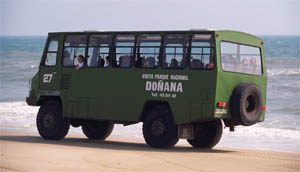 is one of Europe's most
important wetland reserves and a major site for migrating
birds. It is an immense area; the parque itself and surrounding
parque natural or Entorno de Doñana (a protected buffer
zone) amount to over 1,300 sq km in the provinces of Huelva,
Sevilla and Cádiz. It is internationally for recognised
for its great ecological wealth. Doñana has become
a key centre in the world of conservationism. is one of Europe's most
important wetland reserves and a major site for migrating
birds. It is an immense area; the parque itself and surrounding
parque natural or Entorno de Doñana (a protected buffer
zone) amount to over 1,300 sq km in the provinces of Huelva,
Sevilla and Cádiz. It is internationally for recognised
for its great ecological wealth. Doñana has become
a key centre in the world of conservationism.
Doñana is well known for its enormous 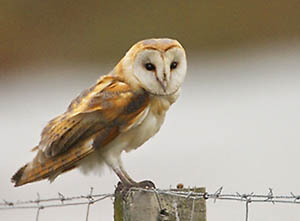 variety of
bird species, either permanent residents, winter visitors
from north and central Europe or summer visitors from Africa,
like its numerous types of geese and colourful colonies
of flamingo. It has one of the world's largest colonies
of Spanish imperial eagles. The park as a whole comprises
three distinct kinds of ecosystem: the marismas, the Mediterranean
scrublands and the coastal mobile dunes with their beaches. variety of
bird species, either permanent residents, winter visitors
from north and central Europe or summer visitors from Africa,
like its numerous types of geese and colourful colonies
of flamingo. It has one of the world's largest colonies
of Spanish imperial eagles. The park as a whole comprises
three distinct kinds of ecosystem: the marismas, the Mediterranean
scrublands and the coastal mobile dunes with their beaches.
The configuration of the Parque Nacional de Doñana
is a result of its past as the delta of the Guadalquivir
river, the 'big river', or Wada-I-Kebir, of the Moors.
But it is a delta with a difference. Unlike most, the river
has only one outlet to the sea, just below Sanlúcar
de Barrameda. The rest of what used to be its delta has
gradually been blocked off by a huge sandbar that stretches
from the mouth of the Río Tinto, near Palos de la
Frontera, to the riverbank opposite Sanlúcar, and
which the sea winds have gradually formed into high dunes.
Behind this natural barrier stretches the marshlands (marismas).
The effect of this extraordinary mélange of land
and water was to create an environment shunned by people
but ideal for wildlife. As early as the thirteenth century,
the kings of Castille set aside a portion of the Doñana
as a royal hunting estate; later the dukes of Medina Sidonia
made it their private coto too. One of the duchesses of
Medina Sidonia, Doná Ana de Silva y Mendoza, indulged
her antisocial instincts by building a residence there
that was more hermitage than palace. As a result, the entire
region came to be known as the 'forest of Doná Ana',
or Doñana. In the eighteenth century, Goya is known
to have visited the Duchess of Alba at the Palacio de Doñana
when she was its proprietress. Subsequently, the land passed
through many hands before the official creation of the
parque nacional in 1969.
Meanwhile, adjoining areas of wetland were being dramatically
reduced. Across the Guadalquivir vast marshes were drained
and converted to farmland, until only the protected lands
of the Doñana remained intact. For centuries there
had been only a vacant spot on the map between Lebrija
in the east and Almonte in the north west, but in recent
years whole towns and villages have sprung up west of the
Guadalquivir, and the resort town of Matalascañas
has brought urban sprawl to the south-western edge of the
Doñana, a place once occupied by reed-thatched fishermen's
huts. The proximity of these settlements has further complicated
the work of the park's wildlife guardians. Two of the Doñana's
precious lynxes, for example, have been run over by cars
on the highway to 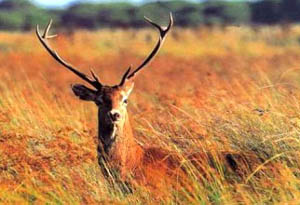 Matalascañas; cats and dogs straying
out of the nearest towns have killed animals in the park,
and birds that have overflown the fences have been gunned
down by trigger-happy hunters despite stringent conservation
laws. Matalascañas; cats and dogs straying
out of the nearest towns have killed animals in the park,
and birds that have overflown the fences have been gunned
down by trigger-happy hunters despite stringent conservation
laws.
A more permanent threat to the Doñana's ecosystem
are the new ricefields and other agricultural projects
north of El Rocío, whose run-off waters sluice pesticides
into the marismas and the sulphur mines upstream at Aznalcóliar
which was effluvium into the river.
Visitor Information:
Entrance to the park is strictly controlled. You can take
half-day trips with official guides or explore the environs
of the visitors' centres on foot.
The park can be reached (but not entered) by taking the ferry
boat across the Guadalquivir river from Sanlúcar de Barrameda
where there is a visitors' centre, the Centro de Visitantes Fábrica
de Hielo (956 38 16 35), with exhibitions on the Doñana.
You can take the Real Fernando boat daily (except in January)
from Sanlúcar for 13km up the Guadalquivir river, stopping
in a few places for guided walks into the park. It's advisable
to book in advance, especially during the summer and holidays.
You can also drive or take a bus into the National Park on the
Sanlucar side of the river. Simply drive out towards Algaida from
Sanlucar passing the Bonanza fishing port and salt marshes. From
here you can take a bike ride, do bird watching or simply relax
in the quite of the park.
It is also possible to visit the beaches of the Donana National Park. From the Bajo de Guia you can get a boat trip across the river for about 6 Euros per person. You can then relax on the beach, do take a pick-nick as there are no shops and don’t expect any toilets…! You are not allowed access into the forrest area, just the beach.
Information for other parts on the Donana Park:
To visit
the principal visitors' centre at El Acebuche, take the
A483
south of
Almonte
and about
12km
from El
Rocío is the signposted turn at Km29 for Centro
de Recepción El Acebuche (959 44 87 11), 1½km
from the main road. Alternatively, you can drive 3km north
of Matalascañas to the turn-off at Km29. The centre
has an exhibition about the park, a café and a
shop selling maps and books. From the centre is a signposted
5km trail through scrubland and pine trees. Next to the
centre is the El Acebuche lagoon, with bird hides, where
you can see purple gallinules, among other birds.
From El Acebuche there are four-hour trips into the park
run by the Cooperativa Marsimas del Rocío (959
43 04 32), which must be booked in advance. The four-wheel
drive vehicle can seat 21 people and guides speak some
English. There are two trips a day (excluding Mondays),
at 0830 and 1500 (1700 in summer). Full day trips can
also be organised for groups, with lunch in Sanlúcar
de Barrameda. A typical trip will take in all three ecosystems
in the park - dunes, matorral and marshland - but the
amount of exposure to each environment varies with the
seasons. One thing is guaranteed - no two visits will
be alike.
The nearest visitors' centre to El Rocío is La
Rocina (959 44 23 40), 500m from the village and just
off the Matalascañas road. It has information on
the park and a 3km-long nature trail along the freshwater
lake and marshland Charco de la Boca, 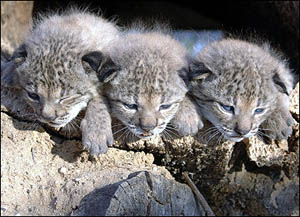 which feeds into
the Madres de la Marismas at El Rocío. The trail
has five bird hides and it's possible to see purple gallinules,
hoopoes, herons and Savi's warblers, among other birds. which feeds into
the Madres de la Marismas at El Rocío. The trail
has five bird hides and it's possible to see purple gallinules,
hoopoes, herons and Savi's warblers, among other birds.
Seven kilometres on from La Rocina is the Palacio del
Acebrón, an old hunting lodge containing exhibitions
on the park. In the grounds is a pleasant 1½-km
nature trail through woodland and around a small lake,
the Charco del Acebrón.
The Centro de Visitantes José Antonio Valverde
on the northern edge of the park has some excellent birdwatching
opportunities. It is 30km south of the town of Villamanrique
de la Condesa, from where it is signposted.
The Playa de Castilla beach, reached on foot east of
Matalascañas, runs alongside the park boundary
and although you can't enter Doñana here, it is
a beautiful, unspoilt stretch of coastline with good birdwatching
possibilities.
Bird Watching
Doñana comprises delta waters which flood in winter and then drop in the
spring leaving rich deposits of silt and raised sandbanks and islands. These
conditions are perfect in winter for geese and ducks but most exciting in spring
when they draw hundreds of flocks of breeding birds. If you're lucky you may
also catch a glimpse of the rare Spanish Imperial Eagle, now down to 15 breeding
pairs. In the marshes and amid the cork oak forests behind you've a good chance
of seeing grey herons, lanner falcons, ring and turtle doves, partridges, oxpeckers,
cattle egret, storks and vultures.
What you see at Doñana depends on the time of
year and the luck of the draw - November, December and
January constitute the off-season for visitors but is
an ideal time for waterfowl, since the autumn rains have
brought life back to the marismas and filled the lagunas.
Gradually, the water attains a uniform depth of 30-60
centimetres (12-24 inches) over vast areas and the resulting
marches attract huge flocks of wildfowl, ducks, geese
and other water birds of the most varied kind. These are
freshwater marshes, incidentally, although there are traces
of sea salt in the underlying silt. Here and there small
islands (vetas) rise above the water. 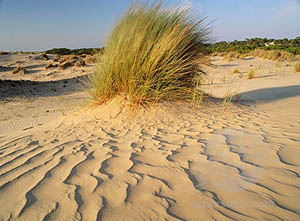 These remain dry
throughout the year, creating an ideal breeding ground
for waders and terns. These remain dry
throughout the year, creating an ideal breeding ground
for waders and terns.
Towards the end of February the geese that have migrated
here from northern Europe commence their return journey,
but at the same time the  spoonbills arrive from North
Africa to nest in the cork oaks. In March the waters begin
to recede and spring begins in earnest. This is also the
time when the imperial eagle hatches its eggs: 15 breeding
pairs of these formidable hunters were counted recently
in the park - above a third of all the imperial eagles
known to survive in Spain. Each pair requires nearly 2,600
hectares of land to hunt over in summer, and even more
in winter. This is a far from perfect environment for
these great birds and Doñana pairs seldom raise
as many young as those elsewhere in Spain. spoonbills arrive from North
Africa to nest in the cork oaks. In March the waters begin
to recede and spring begins in earnest. This is also the
time when the imperial eagle hatches its eggs: 15 breeding
pairs of these formidable hunters were counted recently
in the park - above a third of all the imperial eagles
known to survive in Spain. Each pair requires nearly 2,600
hectares of land to hunt over in summer, and even more
in winter. This is a far from perfect environment for
these great birds and Doñana pairs seldom raise
as many young as those elsewhere in Spain.
In spring the marismas are alive with birds - some settling
down to breed, others en route for more northern climes.
Huge numbers of kites hang in the air, harriers send the
duck scurrying skywards in fear of their lives. There
are black-tailed godwit and ruff on their way to Holland
and beyond, greenhank and wood sandpiper bound for Scandinavia,
little stint and curlew sandpiper heading for northern
Siberia and usually a marsh sandpiper that should be a
thousand kilometres or more further east.
Overhead, vast flocks of whiskered terns wheel and circle
along with a few gullbilled terns and racy pratincoles.
There are swallows galore, some of them red-rumped, and
bee-eaters and rollers perch on post and wire. All of
these and more can be seen from the bridge at El Rocío
- perhaps the best free birdwatching in Europe.
From bird hides at the reserve centre, just south of
the bridge, you will hear Cetti's and Savi's warblers
and watch egrets, herons and little bitterns come and
go. Marsh harriers and kites are continually on view and
sometimes a majestic imperial eagle will soar from the
woods of Doñana over El Rocío to the Coto
del Rey. come and
go. Marsh harriers and kites are continually on view and
sometimes a majestic imperial eagle will soar from the
woods of Doñana over El Rocío to the Coto
del Rey.
In mid-summer the temperature in the parched marismas
easily exceeds 40°C. Aquatic birds that remain in
the stagnant pools die of botulism, and each year thousands
more die during the advancing drought in the Doñana.
In August, there is almost nothing left of the marsh's
aquatic fauna, but it is a good time for observing dozens
of summer residents, which include griffon vulture, booted
eagle, red and black kites, short toed eagle, Baillon's
crake, purple gallinule, great spotted cuckoo, Scops owl,
red necked nightjar, bee eater, hoopoe, calandra, short
toed and thekla larks, golden oriole, azure winged magpie.
Cetti's and Savi's warblers, tawny pipit, great grey shrike,
woodchat shrike and serin.
|